
Roasted Garlic Rosemary Focaccia: The Best Overnight Focaccia Bread Recipe
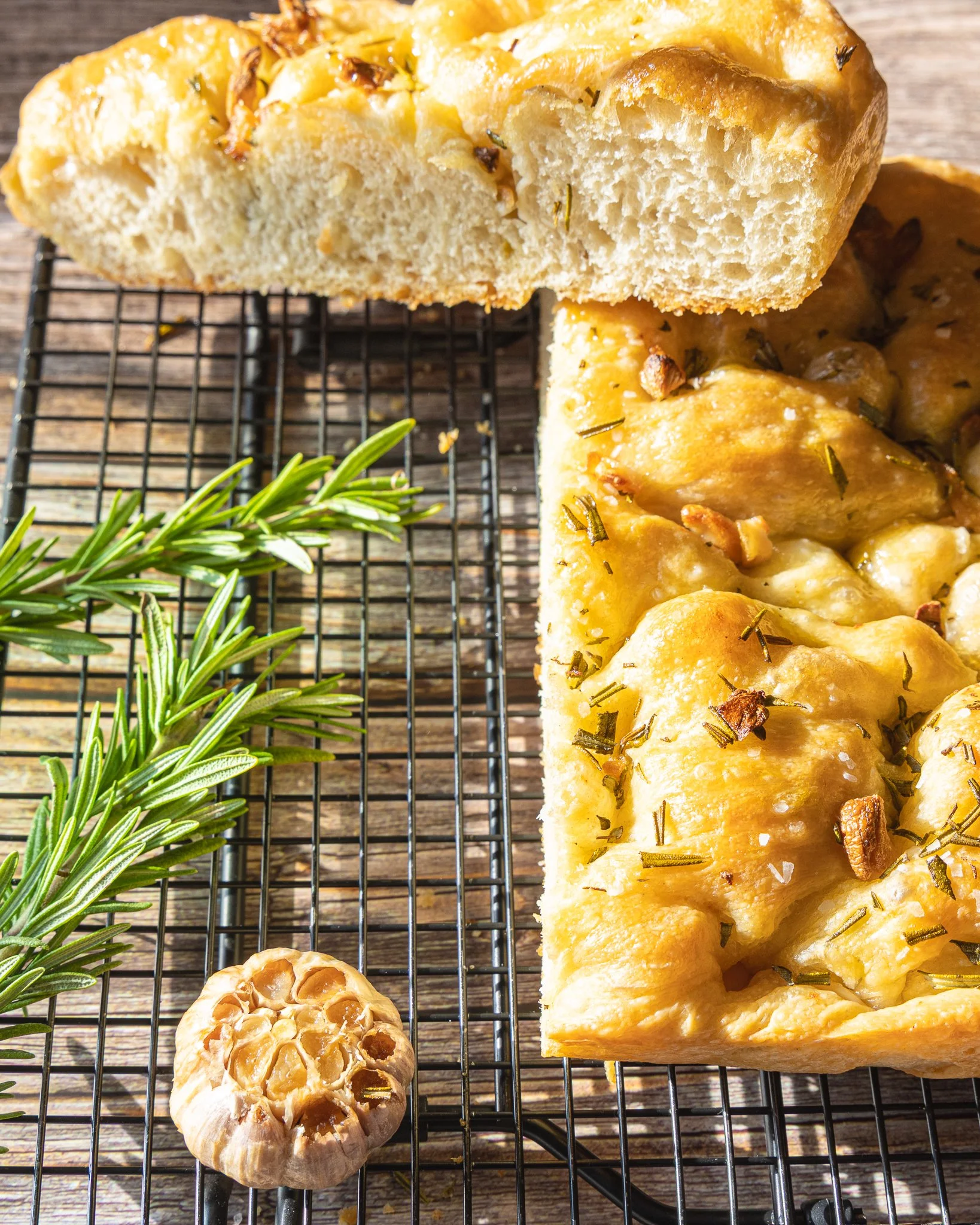
An Easy Overnight Bread That's Full of Flavor
There's something incredibly satisfying about baking fresh focaccia at home, especially when it's infused with roasted garlic, fragrant rosemary, and rich extra virgin olive oil. This Roasted Garlic Rosemary Focaccia combines a simple overnight dough with classic Italian flavors to create a bakery-quality bread that's crisp on the outside, light and airy on the inside, and packed with savory goodness.
The overnight fermentation allows the dough to develop incredible flavor and texture with very little hands-on work. By the time it's ready to bake, the dough is filled with air bubbles that create the signature open crumb focaccia is known for. Topped with creamy roasted garlic, fresh rosemary, flaky sea salt, and a generous drizzle of olive oil, every bite is rich, aromatic, and deeply satisfying.
Whether you're serving it alongside pasta, soup, charcuterie, or simply enjoying it warm with olive oil for dipping, this homemade focaccia is a recipe you'll come back to again and again.
Why You'll Love This Roasted Garlic Rosemary Focaccia
This recipe uses a high-hydration dough and an overnight rise to produce exceptional flavor without complicated techniques.
Here's why this focaccia stands out:
Soft, airy interior with a crisp golden crust
Deep flavor from overnight fermentation
Rich roasted garlic in every bite
Fresh rosemary adds classic Mediterranean flavor
Simple stretch-and-fold method instead of kneading
Perfect for beginners and experienced bakers alike
Versatile enough to customize with your favorite toppings
The result is a rustic bread that tastes like it came from an artisan bakery.
The Secret to Light and Airy Overnight Focaccia
The key to exceptional focaccia isn't just the ingredients—it's time.
Allowing the dough to ferment overnight in the refrigerator gives the yeast time to slowly develop flavor while strengthening the dough. This slow fermentation creates the large air pockets and chewy texture that define authentic focaccia.
Because the dough contains a high percentage of water, it bakes into a bread that's moist, tender, and wonderfully open inside while developing beautifully crisp edges.
Although the dough may look sticky and shaggy when first mixed, resist the urge to add more flour. As the stretch-and-fold process continues, the gluten develops naturally, transforming the dough into a smooth and elastic consistency.
Why Roasted Garlic Makes All the Difference
Roasting garlic completely changes its flavor.
Instead of the sharp bite associated with raw garlic, roasting transforms the cloves into a soft, buttery spread with a mellow sweetness and rich caramelized flavor.
As the focaccia bakes, the roasted garlic melts into the dough, creating pockets of savory flavor throughout the bread without overpowering the rosemary or olive oil.
For the best results, roast the garlic until the cloves are golden, soft, and easily squeezed from their skins.
Fresh Rosemary Brings Classic Flavor
Rosemary is one of the most traditional herbs used in focaccia, and for good reason.
Its woodsy aroma pairs beautifully with roasted garlic and olive oil while adding freshness that balances the richness of the bread.
Fresh rosemary is recommended whenever possible because it provides brighter flavor and better texture than dried herbs. As it bakes, it becomes fragrant and lightly crisp while infusing the entire loaf.
Combined with flaky sea salt, rosemary creates the unmistakable flavor that makes homemade focaccia so memorable.
Why Stretch and Fold Works Better Than Kneading
Many home bakers are surprised to learn that great focaccia doesn't require intensive kneading.
Instead, this recipe uses three rounds of stretch and folds.
This gentle technique develops gluten while preserving the dough's high hydration, resulting in:
Better structure
Larger air pockets
Improved elasticity
Softer crumb
With each round, the dough becomes smoother, stronger, and easier to handle without sacrificing its light texture.
Don't Skip the Overnight Rise
One of the biggest mistakes bakers make is rushing the fermentation process.
An overnight rise develops:
Better flavor
Stronger gluten structure
Improved oven spring
Larger air bubbles
After refrigeration, allowing the dough to warm at room temperature is equally important.
When properly proofed, the dough should feel light, puffy, and full of visible bubbles before baking.
Patience is one of the biggest secrets to making exceptional focaccia.
The Importance of Dimpling Focaccia Dough
The signature appearance of focaccia comes from its deep dimples.
Using well-oiled fingertips, press firmly into the dough just before baking.
These dimples serve several purposes:
They create the classic focaccia appearance.
They help distribute olive oil across the surface.
They prevent the dough from rising unevenly.
They create small pockets where roasted garlic and rosemary settle during baking.
Don't be afraid to press deeply—the dough will puff beautifully around the indentations in the oven.
How to Know When Your Focaccia Is Done
Perfect focaccia should have a crisp, deeply golden crust with a soft and airy center.
Look for these signs:
Rich golden-brown top
Crisp edges that release easily from the pan
Lightly caramelized garlic
Internal temperature between 205°F and 210°F if using a thermometer
Allow the bread to cool for at least 20 minutes before slicing. This gives the crumb time to set while preserving its airy texture.
Serving Ideas for Roasted Garlic Rosemary Focaccia
One of the best things about homemade focaccia is its versatility.
Serve it with:
Pasta dishes
Homemade soups
Fresh salads
Charcuterie boards
Olive oil and balsamic vinegar
Sandwiches
Grilled meats
Cheese platters
It's equally delicious warm from the oven or toasted the next day.
Easy Ways to Customize This Overnight Focaccia
Once you've mastered this dough, it's easy to create new flavor combinations.
Popular variations include:
Roasted Garlic and Parmesan
Cherry Tomato and Basil
Caramelized Onion and Gruyère
Jalapeño Cheddar
Everything Bagel Seasoning
Kalamata Olive and Herb
Sun-Dried Tomato and Mozzarella
The same overnight dough provides a reliable foundation for countless artisan focaccia recipes.
Frequently Asked Questions
-
Yes. The dough can remain refrigerated for up to 24 hours, developing even more flavor before baking.
-
High-hydration dough is naturally sticky. Avoid adding excess flour, as this can reduce the airy texture of the finished bread.
-
Fresh rosemary provides the best flavor, but dried rosemary can be substituted if necessary. Use a smaller amount since dried herbs are more concentrated.
-
Roasting is highly recommended because it creates a sweet, mellow flavor that blends beautifully into the bread.
-
Yes. Once cooled, wrap the focaccia tightly and freeze for up to three months. Reheat in the oven to restore its crisp crust.
-
Extra virgin olive oil provides the richest flavor and helps create the crisp, golden crust focaccia is known for.
Final Thoughts
This Roasted Garlic Rosemary Focaccia is everything great homemade bread should be—crispy around the edges, soft and airy inside, and infused with the rich flavors of roasted garlic, fresh rosemary, and quality olive oil. The overnight fermentation creates remarkable texture with minimal effort, making this recipe ideal for both beginner and experienced bakers.
Whether you're serving it with dinner, building sandwiches, or enjoying it on its own, this overnight focaccia recipe is one you'll want to make again and again. Once you've mastered this base recipe, you'll have the perfect foundation for creating countless flavorful focaccia variations throughout the year.

Roasted Garlic Rosemary Focaccia
Learn how to make the best Roasted Garlic Rosemary Focaccia with an easy overnight dough. This homemade focaccia features roasted garlic, fresh rosemary, olive oil, and a crisp golden crust with a soft, airy crumb.
Ingredients
Instructions
- Cut the tops off both garlic heads.
- Drizzle with olive oil.
- Wrap loosely in foil.
- Bake
- 400°F
- 35–40 minutes
- In a large bowl:
- 500g bread flour
- 10g salt
- 5g instant yeast
- Add:
- 400g water
- 30g olive oil
- Mix until no dry flour remains.
- Perform 3 rounds:
- Round 1
- Stretch each side over itself.
- Rest 20 minutes.
- Round 2
- Repeat.
- Rest 20 minutes.
- Round 3
- Repeat.
- The dough should now feel:
- Smoother
- Stronger
- More elastic
- Refrigerate:
- 12–24 hours
- Remove from fridge.
- Let sit:
- 3–4 hours
- Generously oil a 9x13 glass baking dish.
- Transfer dough gently.
- Let rest:
- 30–45 minutes
- Squeeze roasted garlic cloves from their skins.
- Distribute across the dough.
- Sprinkle:
- Rosemary
- Flaky sea salt
- Drizzle:
- 2–3 tbsp olive oil
- Oil your fingertips.
- Press straight down to create deep dimples.
- Don't be shy.
- The dimples are what make focaccia look incredible.
- Temperature
- 425°F
- Time
- 25–30 minutes
- Rotate halfway through if needed.
Notes
Done When
You see:
- Deep golden brown top
- Crisp edges
- Garlic lightly caramelized
- Internal temp around 205–210°F (96–99°C) if you check
Finish
Immediately after baking:
- Light drizzle of olive oil
- Tiny sprinkle of flaky sea salt
- Optional extra fresh rosemary
- Cool at least 20 minutes before slicing.
Nutrition Facts
Calories
318Fat
10 gSat. Fat
1 gCarbs
48 gFiber
2 gNet carbs
46 gSugar
0 gProtein
8 gSodium
514 mgCholesterol
0 mg